




Joe Barham was sitting on a panel at SF Music Tech alongside Tim Westergren, the founder of Pandora. Tim was describing a future where anyone could listen to any song from anywhere, streamed from the cloud. Joe, meanwhile, was programming a radio station that had just been acquired by Cumulus Media Partners, a massive corporation whose leadership in Atlanta was dictating what San Francisco listeners should hear. “I’m like, man, this feels like a better place for me to spend my time than this terrestrial radio station where we’ve been kind of told what to play,” he recalled.
That moment planted a seed. But Joe did not rush to start a company. Instead, he made a deliberate decision that would shape the next half-decade of his life.
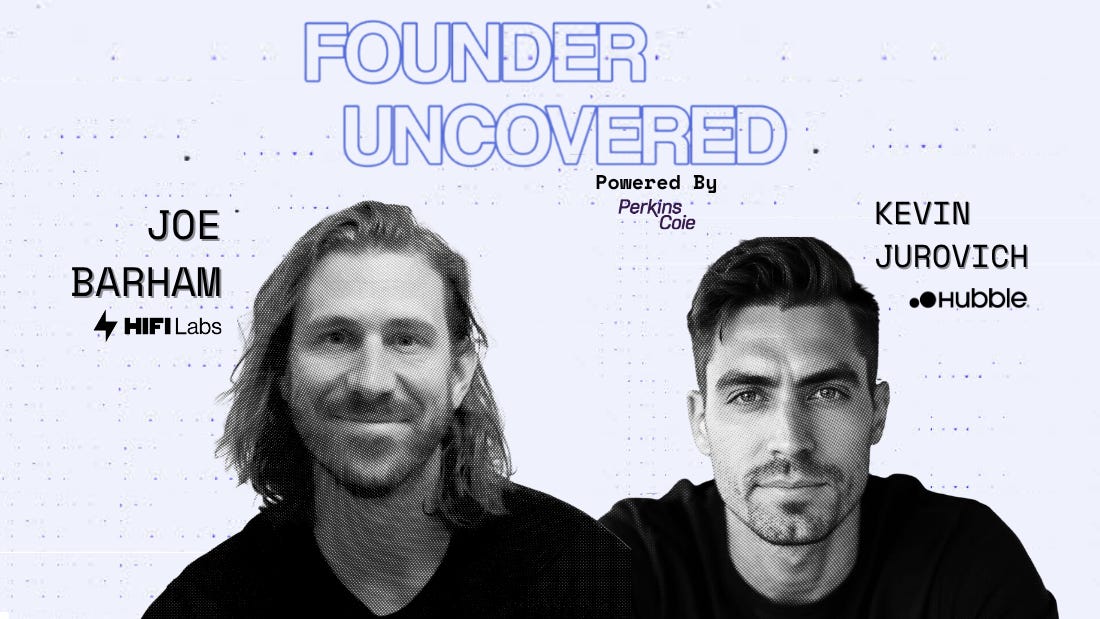
Meet Joe
Joe grew up in Northern California with music as the constant. His earliest memories are of his parents playing Bob Dylan, John Prine, Cat Stevens, and Kingston Trio records in the living room. “There’s a fire going and there’s music and that music is bringing joy to everyone,” he said. “That never left me like my whole life.”
His mom was an art teacher, and Joe noticed early that the arts never got the resources they deserved. It stuck with him. By high school, he had a radio show and was building out playlists. In college at SF State, he studied broadcasting. That led to eight years in the radio industry, where he worked his way up from intern to music director at a major San Francisco station.
Today, Joe lives just north of Golden Gate Park with his family. He is the co-founder and CEO of HIFI Labs, a music technology company that works with artists ranging from Linkin Park and Bruno Mars to Rufus Du Sol and Snoop Dogg.
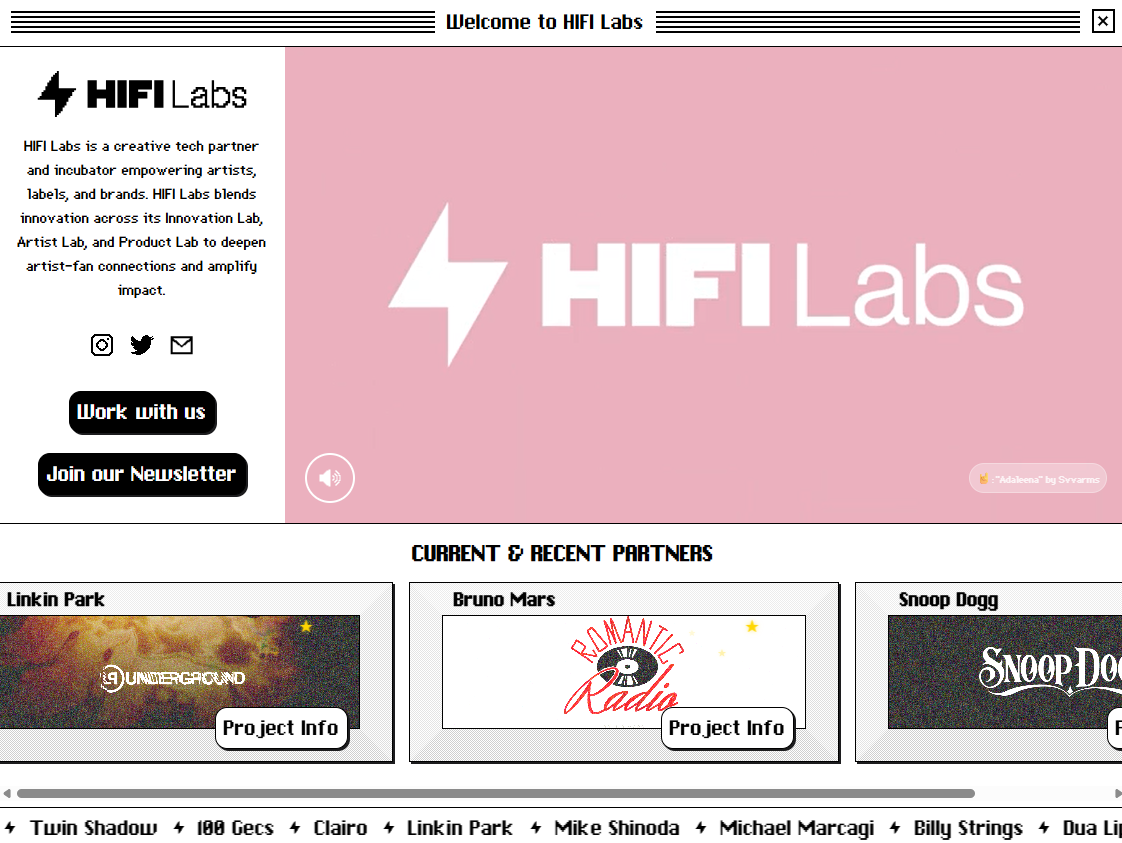
Meet HIFI Labs
HIFI Labs is rebuilding the infrastructure that connects artists to their fans. Joe describes it bluntly:
“I think the music industry has built these types of houses and the plumbing is an effing mess and it’s no one’s fault.”
The company operates across three pillars. Activations are the creative side: custom approaches to how artists share new singles, albums, and tours. Optimization focuses on data capture, ensuring artists and their teams actually own and control the data from their fan interactions rather than ceding it entirely to platforms. Monetization builds on those first two pillars to create new revenue pathways.
For Linkin Park, HIFI Labs helped relaunch their fan club, building the infrastructure behind the scenes that makes the fan experience work. For Rufus Du Sol, they supported a North American tour announcement. For Dua Lipa, a livestream in Times Square. Each engagement is high-touch and custom.
“We don’t really care what it is,” Joe said of the mediums they work across. “We want to make sure the artists are optimized in that discovery.”
Know Your Song Before You Start Singing
What makes Joe’s path unusual is how deliberately he prepared. After that SF Music Tech panel, he did not go home and incorporate a company. Instead, he made a plan: spend up to five years working in different parts of the music industry so that when he did start something, he would know the space from every angle.
“Not to reference the vinyl that was playing in my living room growing up, but like Bob Dylan, know your song well before you start singing. I believe in mastership and really understanding the space from all the angles.”
So he kept managing the Stone Foxes, a San Francisco band he had guided for eight years. He started a music tech agency. He worked at Gametime, a ticketing company. He worked at StarMaker, a karaoke app. And then all of that led him to Patreon.
Patreon felt like the dream job at first. Direct artist-to-fan connection, a platform that was genuinely changing how creators earned a living. But six months in, Joe felt the same restlessness. “It was very much a platform,” he said. Artists and managers he spoke with “didn’t really all want to say fans come here on my Patreon and connect. They want it to be more unique.” They wanted personalized digital brands, not a one-size-fits-all page on someone else’s platform.
That realization of what artists actually wanted became the foundation for HIFI Labs. And once Joe started building it, something shifted. “Since starting, I don’t have the itch anymore,” he said.
Morning Brain; Afternoon Crash
Running HIFI Labs with a young son at home forces Joe to be intentional about how he spends his energy. He front-loads his most important decisions into the morning hours when his brain is sharpest. “I know my brain and my body is most on point” before noon, he said. Client calls, infrastructure-level team meetings, anything requiring serious cognitive output gets that window.
After 3 p.m., the energy shifts. Living just north of Golden Gate Park gives him the ability to step away. “You can go down into the city, if you will, and you can get into as much as you want to, and then 15 minutes away, you can escape.”
He gets his best ideas in the shower or while walking through the park. “There’s something about the momentum,” he said. It is a simple realization, but one he has learned to build his schedule around rather than fight against.
The Five-Year View
Joe sees a future where the discovery layer of music is transparent and direct. Agentic search is already reshaping how consumers find things.
“Everyone’s been building for SEO, building massive digital marketing plans. But then all of a sudden, you have these bots that are doing search on behalf of people.”
Agentic commerce, where AI assistants buy tickets and discover music on a fan’s behalf, is one of the biggest emerging shifts he sees in entertainment.
Hardware is another frontier. Wearables, glasses, contact lenses: Joe believes the next wave of devices will create entirely new surfaces for music engagement. HIFI Labs is positioning to ensure artists are optimized for discovery regardless of what form that hardware takes.
But through all the technology talk, Joe keeps coming back to the human layer.
“I feel right now, this current moment in time with AI and technology is going to amplify the value of humanity and human connection.”
He pointed to a Cameron Winter piano set at Carnegie Hall as the kind of experience that no amount of pyrotechnics or AI-generated content can replace. The goal is not to eliminate the human element. It is to clear away the broken infrastructure so that the connection between artist and fan is cleaner, more direct, and more honest.
“Can we continue to just be really good at offering that transparency to artists and their fans and help them build those universes that create more of an option for the fan? Let them find the music they love. Let them have the experience.”
This season is supported by Perkins Coie. Perkins Coie is a leading international law firm known for providing high-value, strategic solutions. The Emerging Companies and Venture Capital team counsels startups and the investors who back them, supporting clients from formation to exit. In the past three years, clients have raised more than $23 billion in private markets between the pre-seed and growth stages. Perkins Coie combines tailored counsel with sector experience, so when it’s time to accelerate, whether for the next financing round, a strategic deal, or going public, your team is ready. To learn more, visit perkinscoie.com
More from Uncovered Media


