



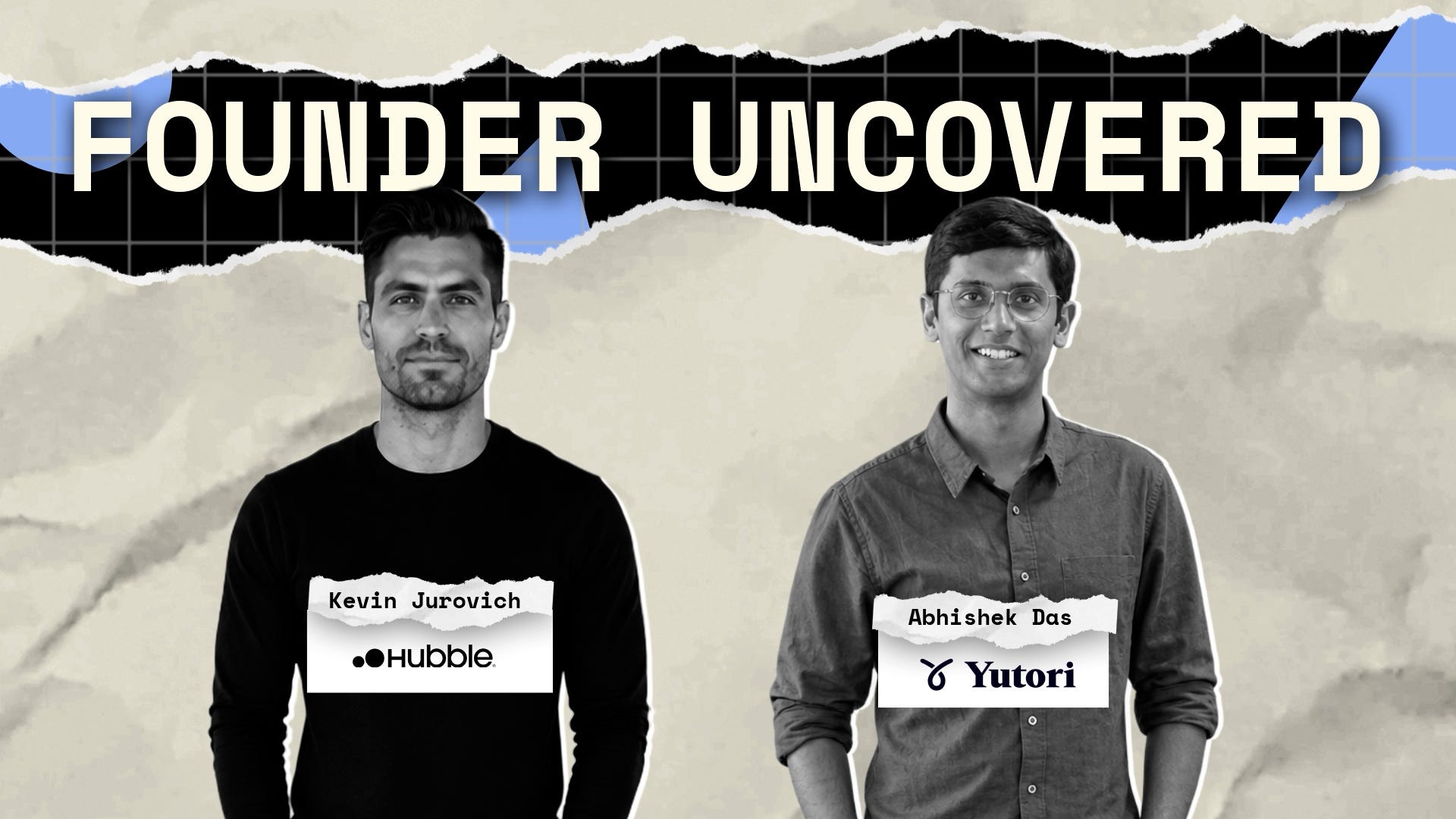

Abhishek Das spent nearly a decade researching autonomous agents before the term became shorthand for nearly any chatbot with a workflow. His bet at Yutori is more specific and harder to prove: before AI can move reliably through the physical world, it must learn to finish ordinary work on the messy, live web.
The opportunity is enormous, but so is the gap between expectation and performance. Gartner predicts that agents will make 15% of day-to-day work decisions and appear in one-third of enterprise software applications by 2028. The same firm expects more than 40% of agentic AI projects to be canceled by the end of 2027 because of rising costs, unclear value or inadequate controls.
That contradiction sits at the center of Das’s work. During his computer science Ph.D., he studied agents across vision, language and embodied environments, then spent three and a half years at Meta as AI capabilities accelerated. By the time agents became a commercial obsession, he had also seen how uneven their intelligence remained. A model might handle a sophisticated reasoning problem, then fail at a deceptively simple task.
In 2024, Das left Meta and teamed up with longtime collaborators Devi Parikh and Dhruv Batra without a finished product in hand. They had spent years discussing what they might build together and believed digital agents would become useful before robots or self-driving systems because software carried lower costs and fewer physical risks.
Yutori’s first product, Scouts, monitors the web for requests such as an apartment matching a precise set of constraints. Its launch drew tens of thousands of signups, but the team admitted users in batches of 100 or 200 while watching for duplicate reports, missed information and other failures that could make an impressive demonstration unreliable in practice.
That discipline captures the larger argument in Das’s story. The agent market will not be won by the company that makes the broadest promise but by the one willing to obsess over the last mile between a plausible result and one that holds up in the real world.
Conversation Nibbles
An appetizer before the entrée
Competition can reveal the opening: Existing monitoring products validated demand, but their inability to interact with websites exposed the last-mile problem Yutori could solve.
A viral launch still benefits from a narrow gate: Releasing Scouts in small batches allowed the team to protect the experience while learning from real usage.
Pricing can become a product constraint: Yutori moved from a fixed subscription to usage-based pricing so improving the product with more computing power would not undermine its economics.
AI products require continuous evaluation: Because model capabilities improve unevenly, founders need rigorous tests that reveal both surprising strengths and basic failures.
Co-CEOs need divided authority, not blurred authority: Das and Parikh make the structure work by assigning clear functional ownership and final decision rights.
Founders need emotional stability as much as agency: Das argues that initiative matters, but so does the ability to absorb the volatility of building a company without letting it dictate every decision.
Enjoy the podcast.
More from Uncovered Media


